TPO Install on a Commercial Flat Roof Done Right
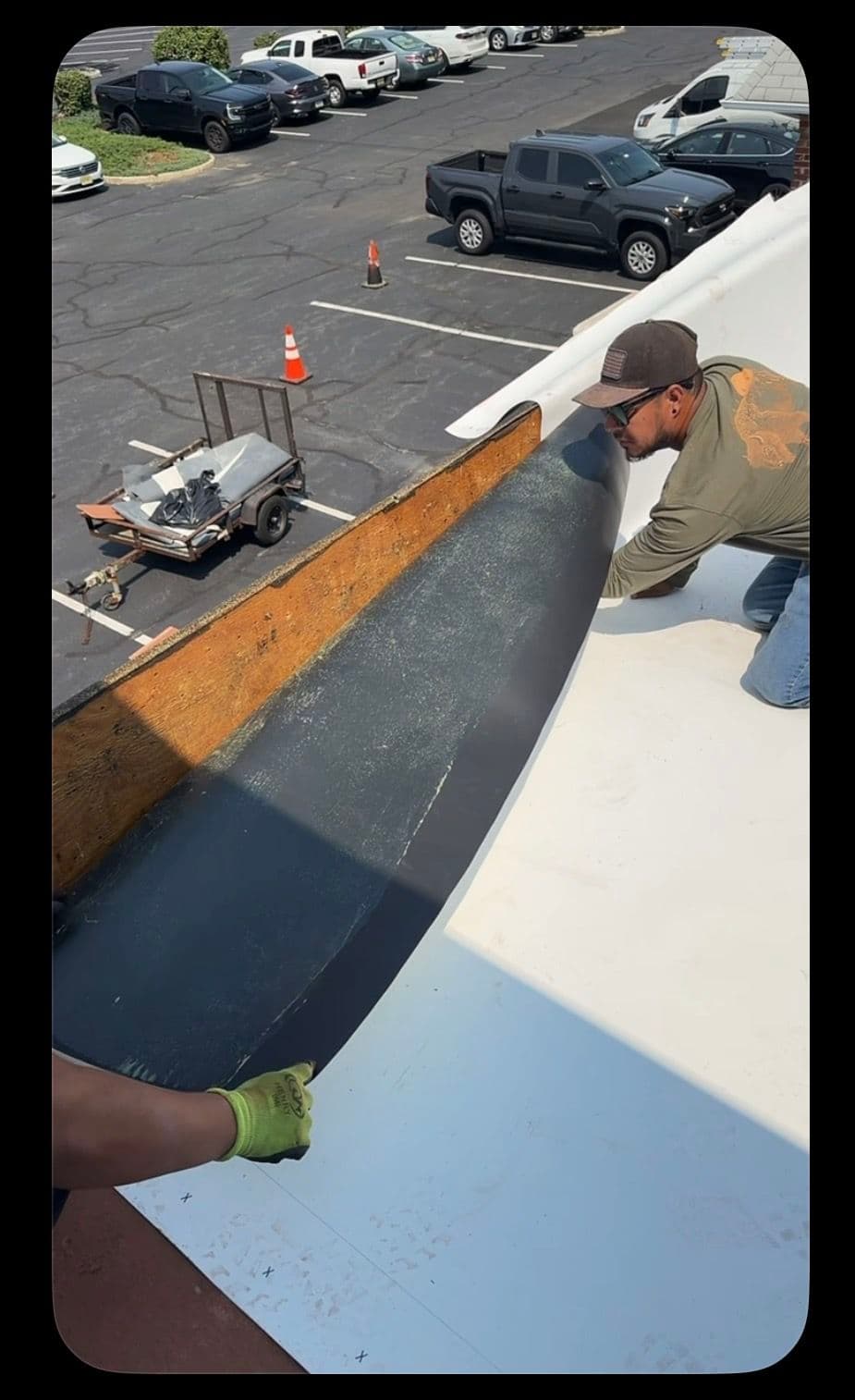
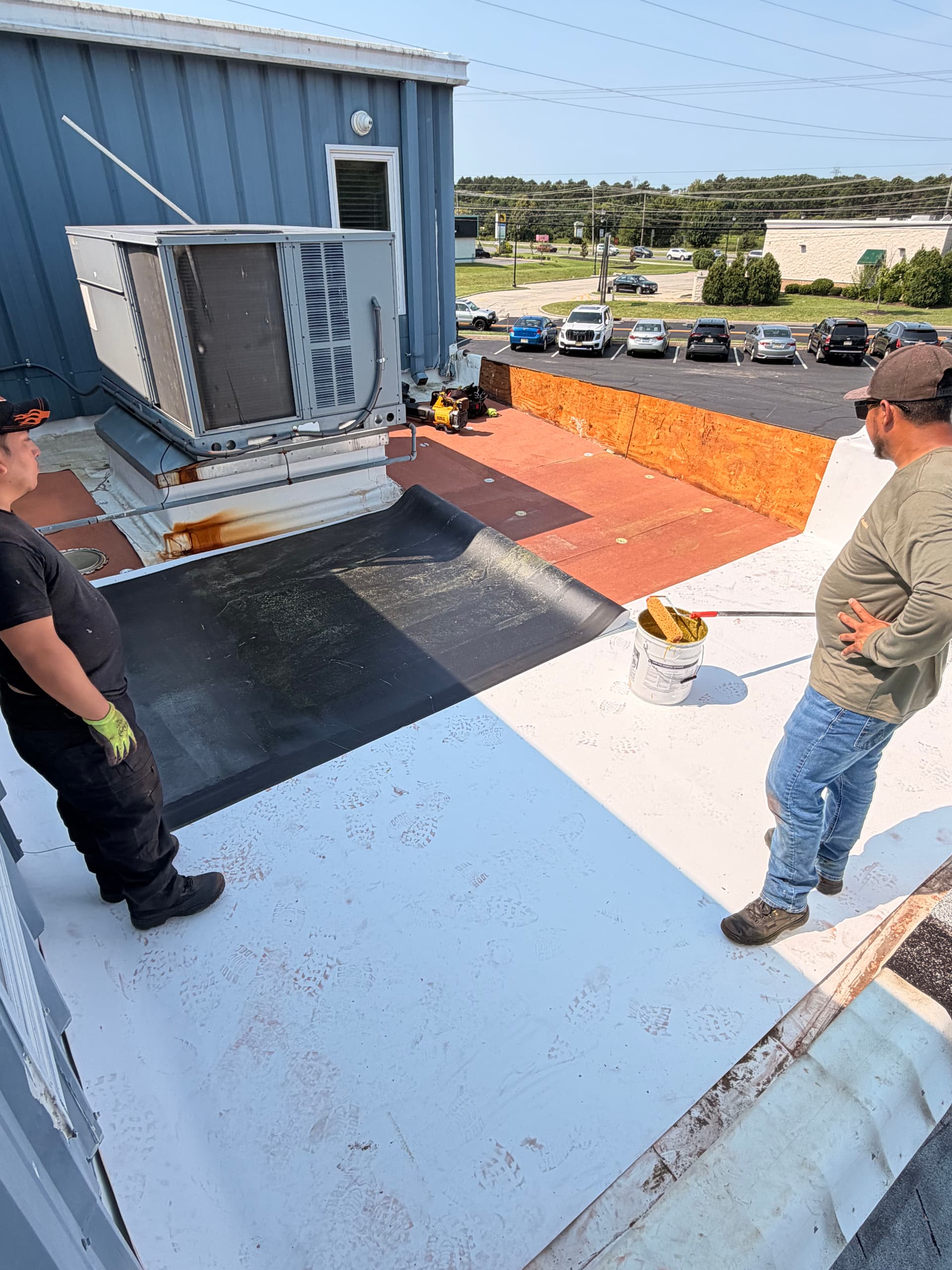
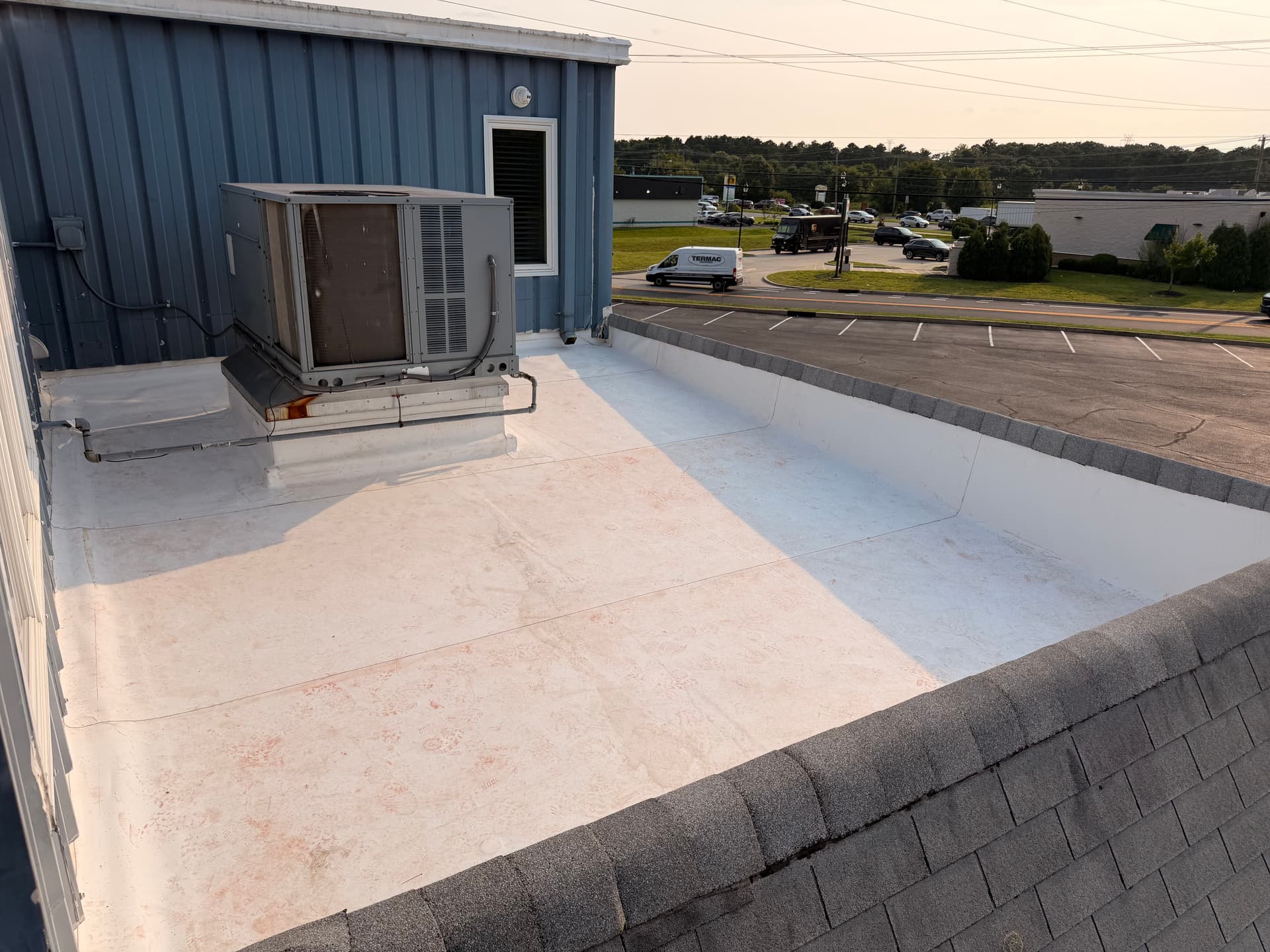
Flat roofs don't give you a lot of warning before they fail. By the time you're dealing with leaks, bubbling membrane, or water-stained ceilings inside the building, the damage has usually already been happening for a while. That's exactly the kind of situation a fresh TPO install is built to address.
Here's what we were working with - an aging flat roof on a commercial building that needed a full system. TPO, or thermoplastic polyolefin, is one of the most reliable membranes you can put on a commercial flat roof. It's flexible, heat-weldable at the seams, and holds up well against UV exposure. That reflective white surface also helps keep cooling costs down during hot stretches of weather, which matters on a building with rooftop HVAC units.
The install process requires patience. The membrane gets rolled out carefully and positioned before any adhesive work happens. Every seam and edge has to be handled correctly - that's where most flat roof failures start. We work through those details methodically because cutting corners there is how you end up back on the roof in two years.
What you end up with is a clean, continuous white membrane pulled tight across the entire field of the roof, wrapped up at the parapet walls, and sealed around the HVAC curbs. No bubbles, no gaps, no loose edges. Just a solid system that protects the building and keeps what's inside dry.
If your commercial flat roof is getting up there in age or you've been patching the same spots over and over, it might be time to look at a full TPO replacement rather than another band-aid fix. We do this work every day and we know how to get it done right.